
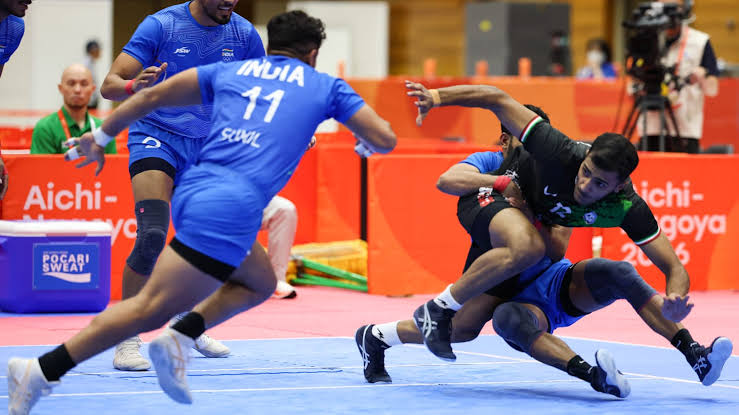
Kabaddi is the national game of Bangladesh. The country officially recognised kabaddi as its national game in 1972. The sport has deep roots in the Indian subcontinent and remains popular in Bangladesh, India and several other Asian countries.
Many people also associate kabaddi with India because it has a long history there and enjoys strong support across the country. However, there is an important difference between a sport being popular and being officially declared a national game. Bangladesh has given kabaddi this recognition, while the Indian government has not officially declared any sport as its national game.
Kabaddi is a team sport that combines strength, speed, balance and strategy. Players take turns entering the opposition’s half to score points while trying to avoid being tackled. Its simple equipment requirements and exciting gameplay have helped it grow beyond village competitions into organised national and international events.
Kabaddi Is the National Game of Which Country?
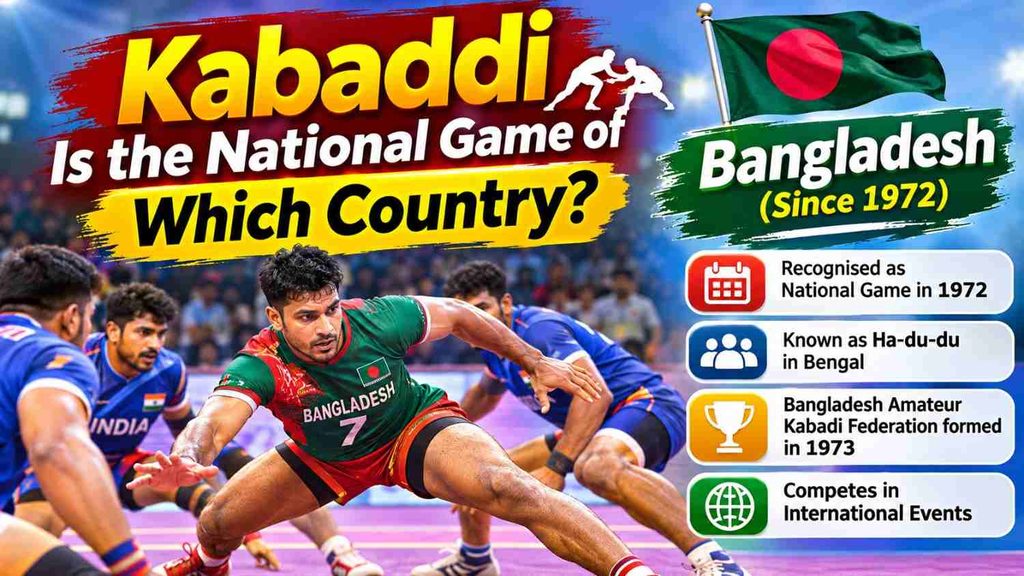
Bangladesh is the country where kabaddi is recognised as the national game. The sport received this status in 1972, shortly after the country gained independence. It was traditionally known as ha-du-du in Bengal before it became known as kabaddi under standardised rules.
Kabaddi has a strong connection with rural life in Bangladesh. People played different versions of the game in villages and open fields. It was popular because players did not need expensive equipment or a dedicated sports ground.
The recognition of kabaddi as the national game helped strengthen its place in the country’s sporting culture. The Bangladesh Amateur Kabaddi Federation was formed in 1973 to organise and develop the sport. It also helped establish rules for organised competitions.
Today, kabaddi remains an important part of Bangladesh’s sporting identity. The country participates in international competitions and competes against teams such as India, Iran, Nepal and Pakistan.
Why Is Kabaddi the National Game of Bangladesh?
Kabaddi became Bangladesh’s national game because of its strong cultural and traditional connection with the people. The sport was already popular in rural areas before the country gave it official recognition.
Several factors explain its importance:
- Traditional roots: Kabaddi has been played across Bengal for generations. The traditional version was widely known as ha-du-du.
- Easy to play: The game requires very little equipment. Players mainly need a marked playing area and a team.
- Physical fitness: Kabaddi tests strength, stamina, speed, flexibility and quick decision-making.
- Community participation: It has traditionally brought villages and local communities together through friendly matches and competitions.
- National identity: Recognising kabaddi in 1972 helped preserve a traditional sport and give it a prominent place in Bangladesh’s sporting culture.
The sport is more than a competitive activity in Bangladesh. It represents a long-standing sporting tradition that connects communities across the country.
Is Kabaddi the National Sport of India?
No. Kabaddi is not officially the national sport of India. Although the game has a long history in the country and is widely played, the Government of India has not declared it the national game.
There is also a common belief that hockey is India’s national sport. However, this is not officially correct either.
In a written Lok Sabha reply in April 2015, the Ministry of Youth Affairs and Sports confirmed that no particular sport had been declared India’s national sport or national game. The government also explained that its objective was to encourage multiple sports rather than give one discipline exclusive national status.
This distinction is important for general knowledge questions. If someone asks which country has kabaddi as its national game, the correct answer is Bangladesh, not India.
India remains one of the leading countries in international kabaddi. Its success in major competitions and the popularity of the Pro Kabaddi League have helped the sport reach a much wider audience.
History of Kabaddi in Bangladesh
Kabaddi developed from traditional games played across the Indian subcontinent. Different regions used different names and local rules. In Bengal, the game was commonly known as ha-du-du.
Before standardised rules were introduced, players often followed local customs. The size of the playing area, number of participants and match conditions could vary between villages.
Bangladesh gave kabaddi national game status in 1972. The formation of the Bangladesh Amateur Kabaddi Federation in 1973 was another important step in organising the sport.
Bangladesh played its first kabaddi Test against a visiting Indian team in 1974. The Indian side also played matches against district teams in different parts of Bangladesh. These early contests helped develop organised competition between the two countries.
The Asian Amateur Kabaddi Federation was formed in 1978 following a meeting involving representatives from Bangladesh, India, Nepal and Pakistan. The first Asian Kabaddi Championship took place in 1980, with India finishing as champions and Bangladesh as runners-up.
Kabaddi became a demonstration sport at the 1982 Asian Games before becoming an official medal sport in 1990.
These developments helped kabaddi move from traditional local competitions towards a more organised international sport.
How Is Kabaddi Played?
Kabaddi is played between two teams on opposite halves of a rectangular court. Each team sends a player, known as a raider, into the opponent’s half to score points.
The raider attempts to touch one or more defenders and return safely to their own half. The defending team tries to stop the raider by tackling them before they cross back.
Seven players from each team take the court at a time. The total squad size depends on the competition. Under IKF rules, national-level squads generally have 10 to 12 players, while international squads can have 10 to 14 players. Some domestic competitions may have their own regulations.
The main objective is to score more points than the opposing team before the match ends.
Basic Rules of Kabaddi
The following table explains some of the main features of kabaddi under standard IKF rules.
| Feature | Standard kabaddi |
| Players on court | 7 per team |
| National-level squad | 10–12 players under IKF rules |
| International squad | 10–14 players under IKF rules |
| Playing area | Rectangular court |
| Senior men’s match duration | 40 minutes |
| Senior women’s match duration | 30 minutes |
| Match structure | Two halves |
| Main attacking player | Raider |
| Defending players | Defenders or antis |
| Main objective | Score points through raids and tackles |
Senior men’s matches are divided into two halves of 20 minutes, while senior women’s matches have two halves of 15 minutes. A five-minute interval separates the halves. Junior and sub-junior categories follow their respective playing conditions.
The exact squad size and match conditions can vary according to the competition and governing rules.
How Does a Raider Score Points?
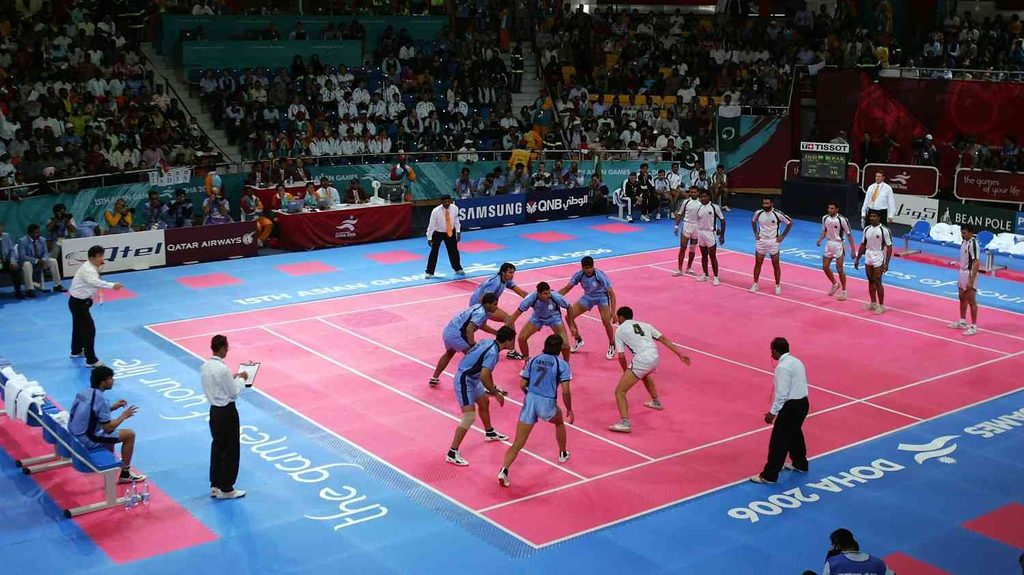
Source Image: Olympics
A raid begins when a player crosses into the opponent’s half. The raider tries to touch defenders and return to their own side without being caught.
A successful touch can earn a point for the raider’s team if the player returns safely. The defenders can also score a point by stopping the raider from returning.
Other scoring situations include bonus points and all-out points. A bonus point may be available when the required conditions are met.
When a team gets all seven opposing players out, it scores two additional all-out points on top of the points earned for putting those players out. The eliminated players are then revived, and the game continues.
Major Kabaddi Competitions Around the World
Kabaddi is no longer limited to traditional village matches. It has developed into an organised sport with national leagues and international tournaments.
Some major competitions include:
| Competition | Importance |
| Kabaddi World Cup | International competition featuring national teams |
| Asian Games | Major multi-sport event where kabaddi is a medal sport |
| Asian Kabaddi Championship | Continental competition for Asian teams |
| Commonwealth Kabaddi Championship | International men’s and women’s competition; inaugural edition held in 2026 |
| Pro Kabaddi League | Professional kabaddi league in India |
| Bangladesh domestic competitions | National-level events that support the sport in Bangladesh |
Kabaddi became a medal sport at the Asian Games in 1990. This gave national teams a regular international platform and helped increase the sport’s popularity across Asia.
The Pro Kabaddi League began in India in 2014. Its television coverage, professional teams and popular players introduced kabaddi to a wider audience. The league also helped make the sport more commercially visible.
India Wins Both Kabaddi Gold Medals at the 2026 Asian Games
India continued its strong international performance at the 2026 Aichi-Nagoya Asian Games. The country won gold medals in both men’s and women’s kabaddi.
The men’s team defeated Iran 40–34 in the final on 26 September 2026. India’s women’s team also beat Iran, winning 37–34 to defend its title.
These victories highlighted India’s strength in both categories and added to its successful Asian Games kabaddi record.
India Wins the Inaugural Commonwealth Kabaddi Championship
The inaugural Commonwealth Kabaddi Championship took place in Ahmedabad from 23 to 31 October 2026. The tournament featured men’s and women’s competitions.
India won both titles:
| Competition | Winner | Runner-up |
| Men’s | India | Sri Lanka |
| Women’s | India | Uganda |
India defeated Sri Lanka 54–20 in the men’s final and beat Uganda 35–15 in the women’s final on 31 October 2026.
Bangladesh also had a notable men’s campaign. Its team reached the semi-final but lost to India. Bangladesh therefore shared the men’s bronze medal with Kenya. The Bangladesh women’s team did not reach the semi-finals.
These results show how kabaddi is continuing to develop beyond its traditional strongholds in South Asia.
Difference Between Kabaddi in Bangladesh and India
Kabaddi is popular in both Bangladesh and India, but its official status differs between the two countries.
| Point | Bangladesh | India |
| National game status | Kabaddi is recognised as the national game | No sport has been officially declared the national game |
| Traditional name | Ha-du-du | Several regional names, including hu-tu-tu and sadugudu |
| Organised development | Bangladesh Amateur Kabaddi Federation formed in 1973 | All India Kabaddi Federation established in 1950 |
| Popularity | Strong traditional and rural following | Strong domestic and professional following |
| Professional competition | Domestic kabaddi events | Pro Kabaddi League |
Both countries have contributed to the development and popularity of the sport. However, Bangladesh is the correct answer when the question specifically asks which country recognises kabaddi as its national game.
Conclusion
Kabaddi is the national game of Bangladesh. The country gave the sport this recognition in 1972, reflecting its deep connection with traditional Bengali culture and rural communities. The game later developed through organised federations and international competitions.
Although kabaddi is also deeply associated with India, it is not officially India’s national sport. The Indian government has confirmed that no sport has received that status.
India’s men’s and women’s gold medals at the 2026 Asian Games and its double victory at the inaugural Commonwealth Kabaddi Championship further demonstrate the sport’s international growth.
Understanding this difference gives a clear answer to a common general knowledge question: Bangladesh is the country whose national game is kabaddi.
Frequently Asked Questions
Kabaddi is the national game of Bangladesh. It received this recognition in 1972.
Bangladesh recognised kabaddi as its national game in 1972. The Bangladesh Amateur Kabaddi Federation was formed in 1973.
No. India has not officially declared any sport as its national game. Kabaddi is popular in India, but it does not hold official national game status.
Kabaddi was traditionally known as ha-du-du in Bengal. It was later given the name kabaddi and recognised as Bangladesh’s national game.
Seven players from each team are on the court at one time. Under IKF rules, national-level squads generally have 10 to 12 players, while international squads can have 10 to 14 players.
